

Personalization is a significant customer expectation — and one many organizations haven’t achieved yet. According to McKinsey & Company, 71% of consumers expect companies to deliver personalized interactions, and 76% get frustrated when this doesn’t happen. The study also found that fast-growing companies drive 40% more of their revenue from personalization compared to slower-growing companies. This illustrates the power that personalized experiences have to improve a company’s performance.
Realizing the true benefits of personalization means going beyond broad customer categories and seriously understanding the needs of individual customers. The most advanced, effective personalization is impossible without AI, centralized data and real-time insights — which makes it possible to create all the content needed to appeal to individual groups. It also gives companies a conversational edge in which customers feel like they’re truly being heard when they’re speaking with a brand.
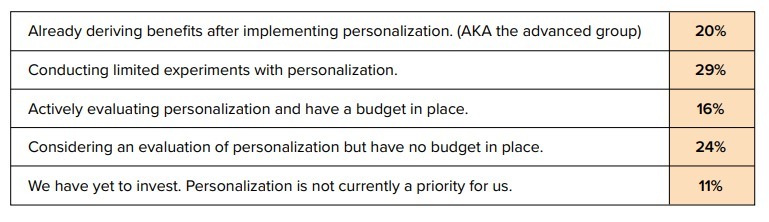
Personalization is not yet the norm, though — which could leave many companies in the dust when customers decide what brands are worth their time. In a recent survey of more than 900 digital customer experience practitioners conducted by CMS Wire, only 20% of respondents said they currently achieve benefits through personalization. The remaining 80% were much less likely to invest in many tools and technologies that help them personalize effectively. Without these tools, these companies are missing out on a vital ingredient for a successful customer journey.
How would you describe your organization’s use of personalization for digital customer experience?
This article is posted at coremedia.com

Please fill out the form to access the content